

The best local seo audit tool depends on the decision you need to make: BrightLocal is a strong all-round option for recurring audits and agency reporting, Whitespark is particularly useful for citation and local-search research, Local Falcon is built around map-grid visibility, and Google Business Profile is the essential free source of first-party profile data. Moz Local and Yext focus more on listings management, while Mr Haq offers a consulting route when the problem spans technical SEO, content, authority, and local search. The comparison below evaluates seven credible options by audit coverage, local ranking data, implementation burden, commercial model, and suitability for small businesses, e-commerce brands, agencies, and companies targeting Bangladesh or multiple markets.
How these local SEO audit options differ
“Local SEO audit” can describe several different jobs. A platform may inspect a Google Business Profile, monitor rankings across a map grid, find inconsistent directory information, check review signals, or produce a client-ready report. Those functions overlap, but they do not answer the same operational question.
- Profile diagnosis: Is the Google Business Profile complete, eligible, accurate, and being managed correctly?
- Listings control: Are the business name, address, phone number, hours, and categories consistent across important directories?
- Visibility measurement: Does the business appear in the local pack or Google Maps from the locations that matter?
- Competitive research: Which categories, citations, pages, and local signals appear to separate visible competitors from weaker ones?
- Execution and reporting: Can a business or agency turn findings into assigned work and explain progress without exporting data manually?
Tool outputs are not proof that Google will improve a ranking. Google explains that local results are primarily influenced by relevance, distance, and prominence, so an audit should lead to a prioritized plan rather than a checklist of directory submissions. See Google’s official explanation of how local results are ranked before treating any score as a promise.
1. BrightLocal
Best use and evidence
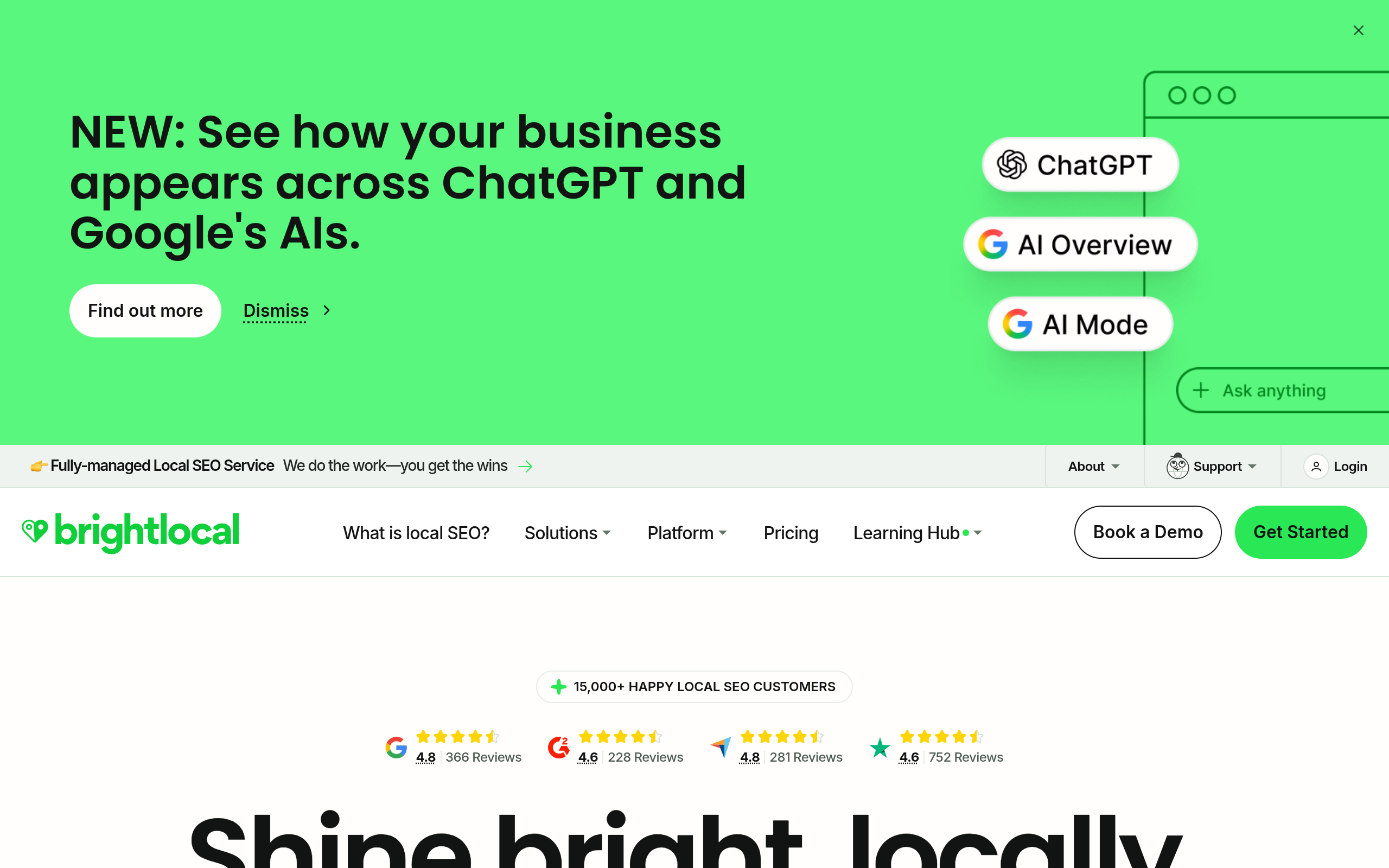
BrightLocal is a broad local SEO platform for businesses and agencies that want rank tracking, citation work, audits, and reporting in one workflow. It is a sensible starting point when the buyer needs to diagnose several local search factors rather than only monitor a map pack. Its official local SEO tools page describes the platform’s main capabilities, while the pricing page is the place to verify current plans and limits in 2026.
For an agency, the practical advantage is the ability to organize recurring client work and produce reports without assembling every metric from separate browser tabs. For a restaurant group or multi-location retailer, it can support a repeatable audit process across locations. For an international company, check country and search-engine coverage before purchase rather than assuming that a workflow designed around one market will translate perfectly to Bangladesh or another target country.
Trade-offs and buyer verdict
- Best for: Small businesses and agencies needing a general-purpose local SEO workspace.
- Does not suit: Buyers who only want a free profile check or highly specialized geospatial analysis.
- Standout: A comparatively broad workflow spanning research, monitoring, and client reporting.
Implementation burden: Moderate. You still need to normalize business data, connect or configure locations, choose useful keywords, and decide which competitors and search areas matter. Garbage inputs can produce polished but unhelpful reports.
Commercial model: Subscription plans with current limits and features listed by BrightLocal. Verify location, keyword, user, and report allowances before committing. It is commercially more appropriate for recurring work than for a one-off owner who wants a quick answer.
2. Whitespark
Best use and evidence
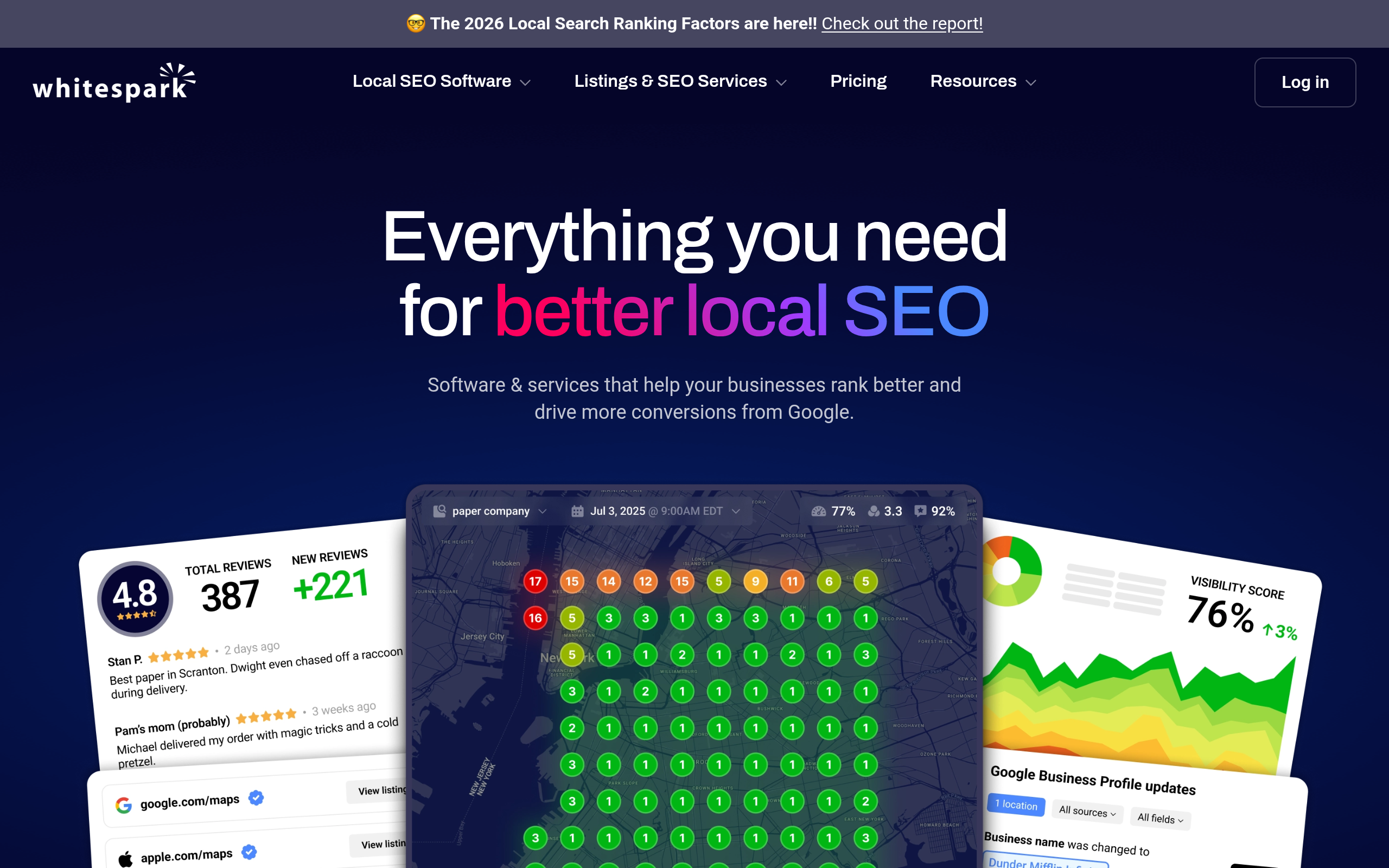
Whitespark is especially relevant when the audit question is where local prominence is being built or lost. Its official Local Citation Finder page explains the citation-discovery use case: identifying citation opportunities and comparing local competitors. That makes it useful for service-area businesses, professionals, and agencies investigating why competitors appear in directories or local results while the client does not.
Whitespark is not a substitute for technical crawling, content analysis, or conversion tracking. A citation gap may be real, but publishing the same business information everywhere will not fix a wrong service area, weak landing page, poor review experience, or an ineligible profile. Use it to create a defensible off-site research brief, then validate whether each directory is relevant to the market and customer.
Trade-offs and buyer verdict
- Best for: Citation discovery, local competitor research, and agencies building a prioritized off-site plan.
- Does not suit: Teams seeking one dashboard for full technical SEO, content, analytics, and local operations.
- Standout: A focused way to investigate citation opportunities instead of submitting to directories indiscriminately.
Implementation burden: Low to moderate for a single location, rising when an agency must validate many markets manually. The important work is judging relevance, ownership, duplication, and quality—not merely collecting names.
Commercial model: Product and service offerings vary, so confirm whether the current purchase is self-service software, a managed service, or a separate research deliverable. It is a good fit when citation intelligence is the bottleneck, not when the buyer needs ongoing profile operations.
3. Local Falcon
Best use and evidence
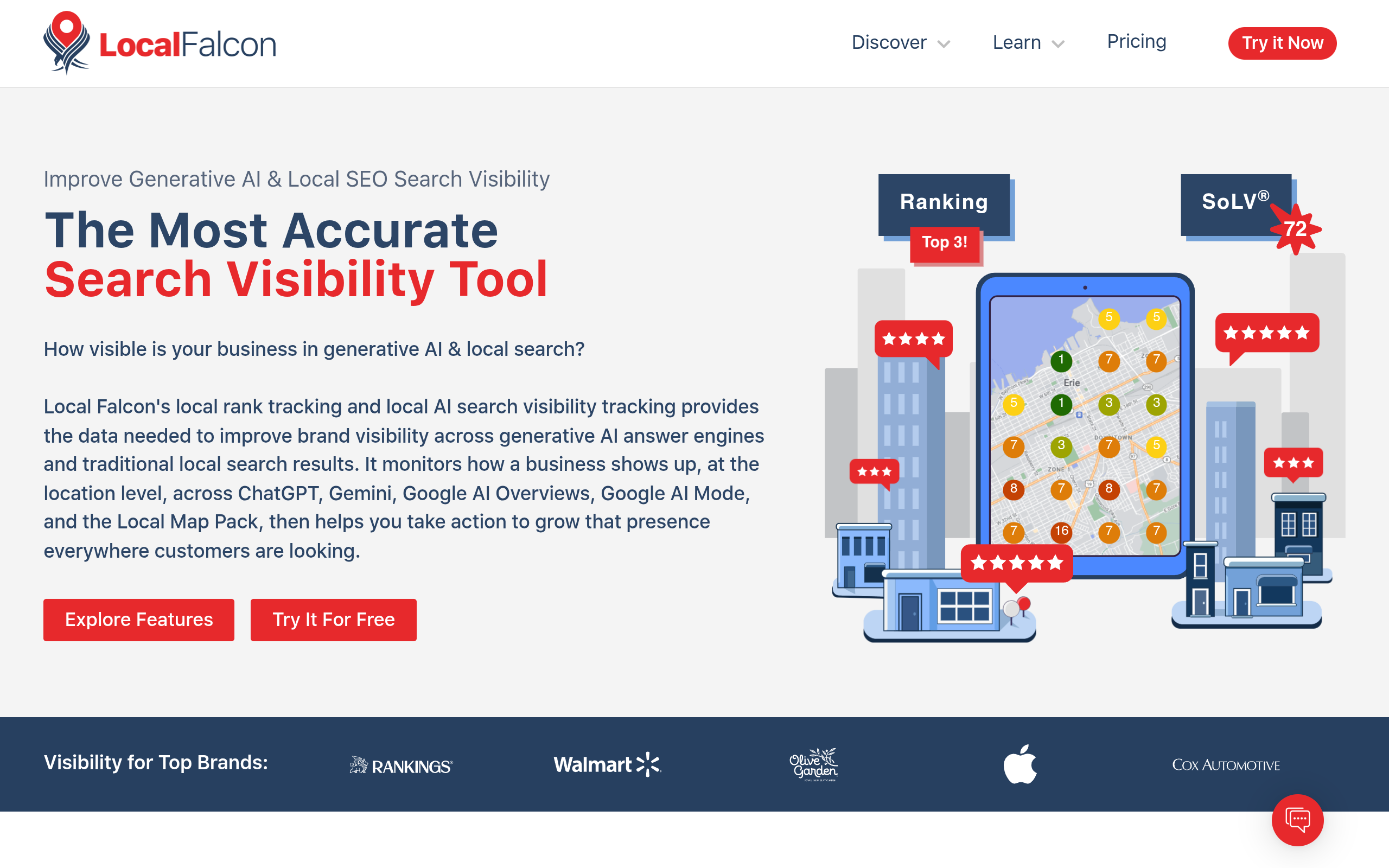
Local Falcon is a specialist option for map-grid rank tracking. Instead of asking only whether a business ranks from one fixed location, a grid-based view samples visibility across a defined geographic area. That distinction matters for a clinic, home-service company, or retailer whose customers search from several neighborhoods. The official Local Falcon site should be checked for current features, data limits, and pricing because those details can change.
The tool is valuable when a client says, “We rank when I search from the office, but customers still cannot find us.” A grid can reveal a small visibility pocket around the address and weaker coverage farther away. That is a measurement insight, not an automatic diagnosis: the next investigation may involve proximity, category relevance, competitors, service pages, reviews, or a profile issue.
Trade-offs and buyer verdict
- Best for: Businesses and agencies that need geographic visibility evidence rather than a single rank number.
- Does not suit: Owners looking for a complete citation, technical, content, and conversion audit in one product.
- Standout: Map-based visibility analysis that makes local coverage easier to explain to a client.
Implementation burden: Moderate. Select meaningful keywords, grid size, location, schedule, and competitor comparisons. A grid that is too broad or built around irrelevant terms creates impressive-looking noise.
Commercial model: Verify the current subscription or usage-based structure and any limits on scans, keywords, locations, or users. The specialist value is easiest to justify when local visibility varies materially by neighborhood or service area.
4. Moz Local
Best use and evidence
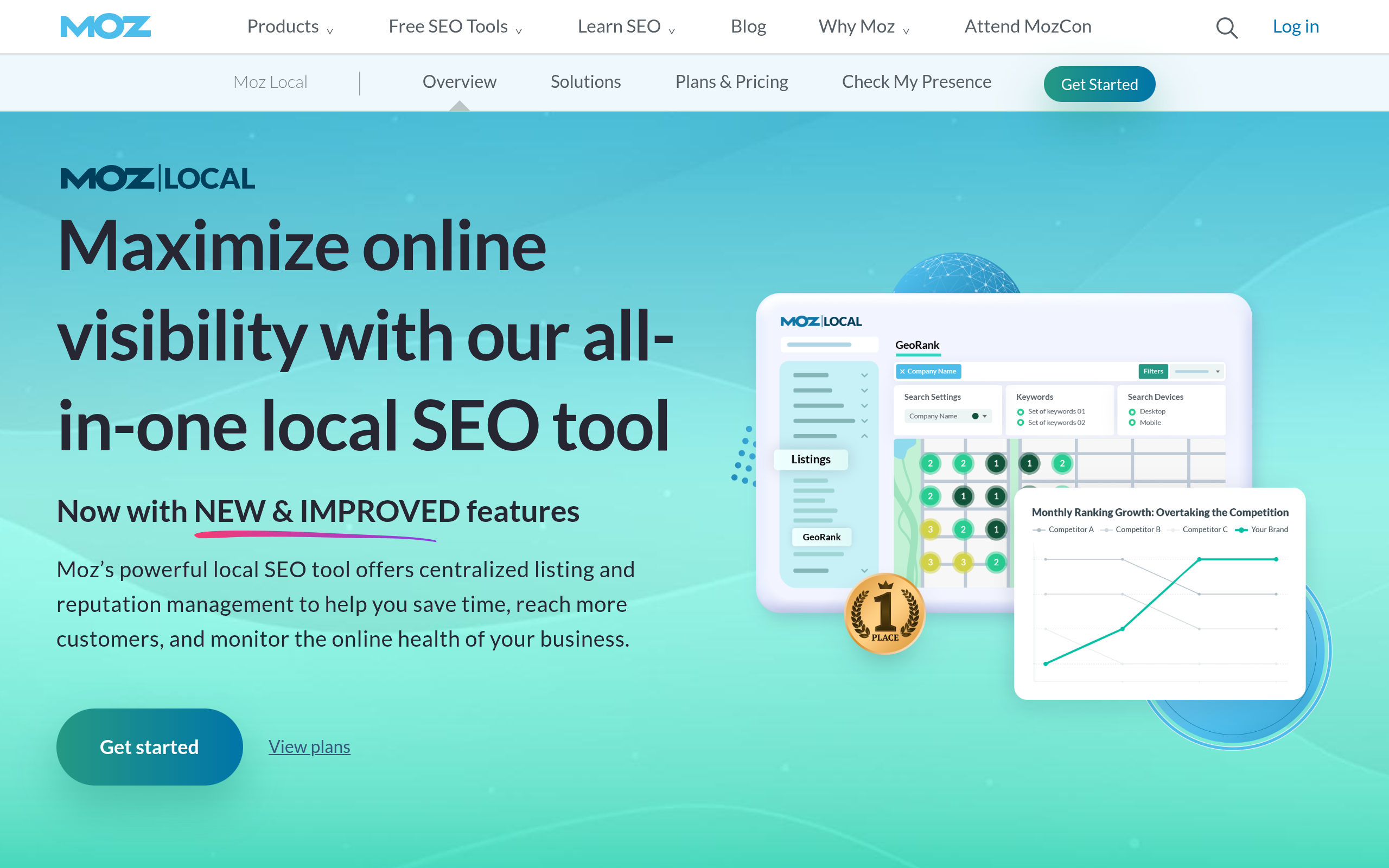
Moz Local is a listings-management option for businesses that need to maintain core business information across supported local data and directory ecosystems. Its official Moz Local product page is the appropriate reference for current capabilities, distribution coverage, and plan details. It is best considered a data consistency and listings operations tool, not a complete replacement for technical SEO or local landing-page strategy.
A multi-location retailer can use this category of product to reduce repetitive updates when hours, phone numbers, or location details change. That operational benefit is different from proving that a location ranks well. Before buying, confirm that the directories and countries relevant to the business are supported; a platform can be credible and still be a poor fit for a market where its distribution network is not important.
Trade-offs and buyer verdict
- Best for: Businesses seeking centralized listings maintenance across supported networks.
- Does not suit: Teams whose main problem is map-grid measurement, content quality, or a technical migration.
- Standout: A recognized listings-management workflow for keeping location data organized.
Implementation burden: Moderate at setup. Expect to verify ownership, reconcile duplicate records, standardize naming and categories, and establish a process for future changes. Multi-location brands need governance so local managers do not overwrite approved data.
Commercial model: Subscription-based product plans should be checked on the official page for current location limits and included features. It is less suitable as a one-time audit purchase because its value depends on maintaining accurate data over time.
5. Yext
Best use and evidence
Yext is a listings and digital presence platform aimed at organizations that need to manage business information across a broad network of digital experiences. Its official homepage is the safest starting point for current product scope and commercial details. Because its offering can extend beyond a basic local audit, buyers should map the exact requirement—location data governance, listings distribution, customer experience, or another workflow—before comparing it with a narrow rank tracker.
Yext can make sense for a brand with many locations, multiple teams, and a formal approval process for location data. It may be excessive for a single local professional who only needs to correct a category, add services, or understand why the profile is not appearing. As with any publisher or network, distribution does not guarantee ranking; relevance and local prominence still require separate work.
Trade-offs and buyer verdict
- Best for: Larger or multi-location organizations that need centralized data governance.
- Does not suit: Small businesses seeking a low-complexity, self-serve local ranking audit.
- Standout: An enterprise-oriented approach to managing location information across digital properties.
Implementation burden: Moderate to high. The organization must define authoritative data, permissions, approval rules, and escalation paths. Without ownership, a platform can centralize confusion rather than remove it.
Commercial model: Confirm the current sales-led or contract-based structure directly with Yext. Ask for an itemized explanation of locations, users, products, integrations, support, and term commitments before treating it as comparable to a low-cost audit tool.
6. Google Business Profile
Best use and evidence
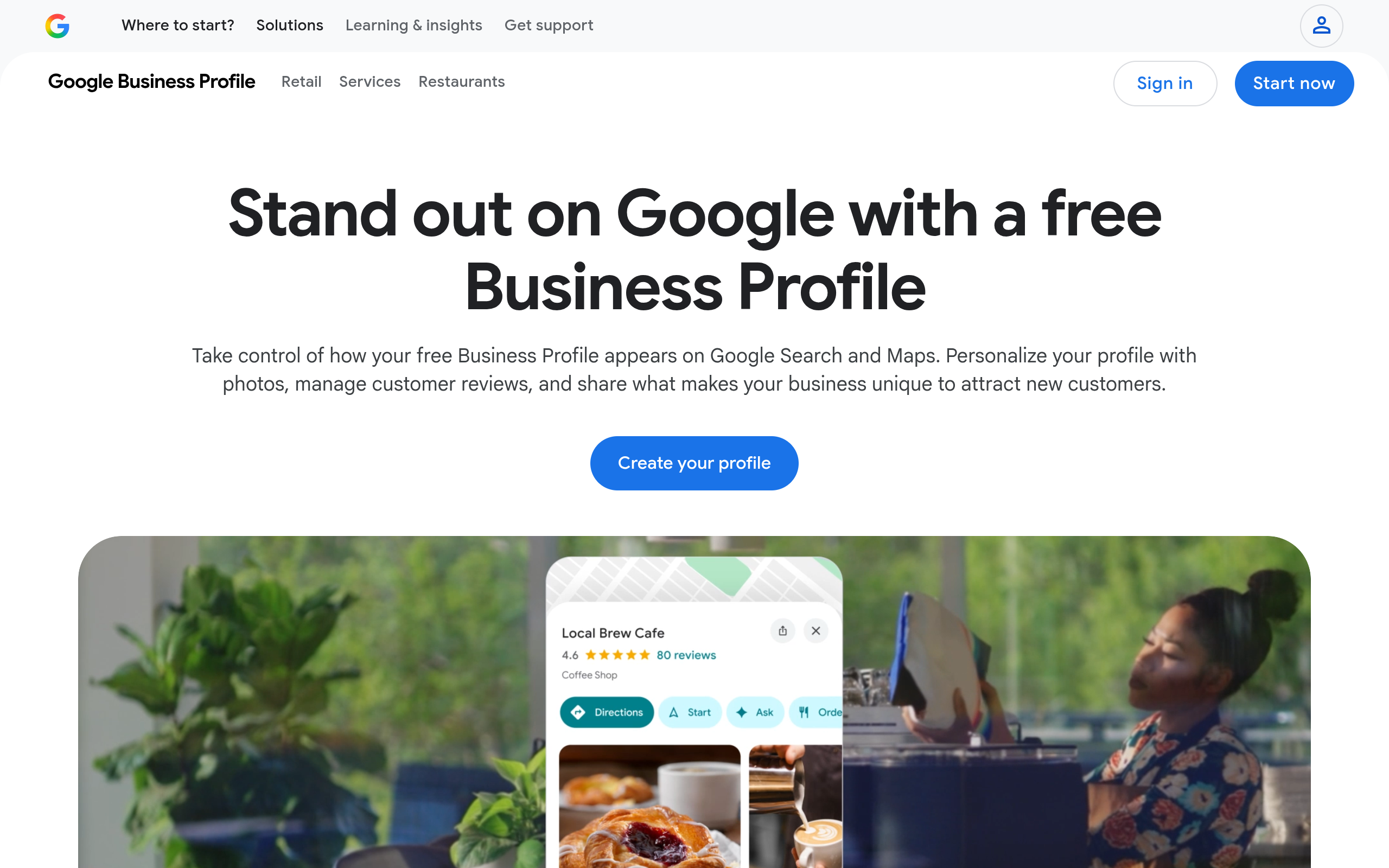
Google Business Profile is the essential first-party starting point for a local audit, not a full third-party audit suite. Businesses can use Google’s official Business Profile help documentation to understand management and verification requirements. The profile is where an owner checks core details such as category, hours, phone, website, service area, photos, reviews, and available performance information.
Its value is that it is closest to the Google surface being optimized and has no software subscription fee. Its limitation is equally important: it does not replace competitor research, citation discovery, broad technical crawling, map-grid measurement, or strategic prioritization. An owner recovering from a suspension or ranking loss should also investigate eligibility, changes in business information, landing-page quality, and unnatural review or link activity rather than repeatedly editing the profile.
Trade-offs and buyer verdict
- Best for: Every eligible local business that needs to establish and inspect its primary Google presence.
- Does not suit: Agencies needing consolidated multi-client reporting or businesses needing competitor and citation intelligence.
- Standout: First-party access to the profile and performance context that third-party tools cannot fully replace.
Implementation burden: Low for one verified location, but higher for complex businesses, service areas, chains, and ownership disputes. The business must keep details accurate and ensure the profile follows Google’s eligibility rules.
Commercial model: The profile itself is free to create and manage, but the labor is not free. Someone must maintain details, respond to reviews, add useful updates, monitor issues, and connect the profile’s findings to the wider SEO plan.
7. Mr Haq
Best use and evidence
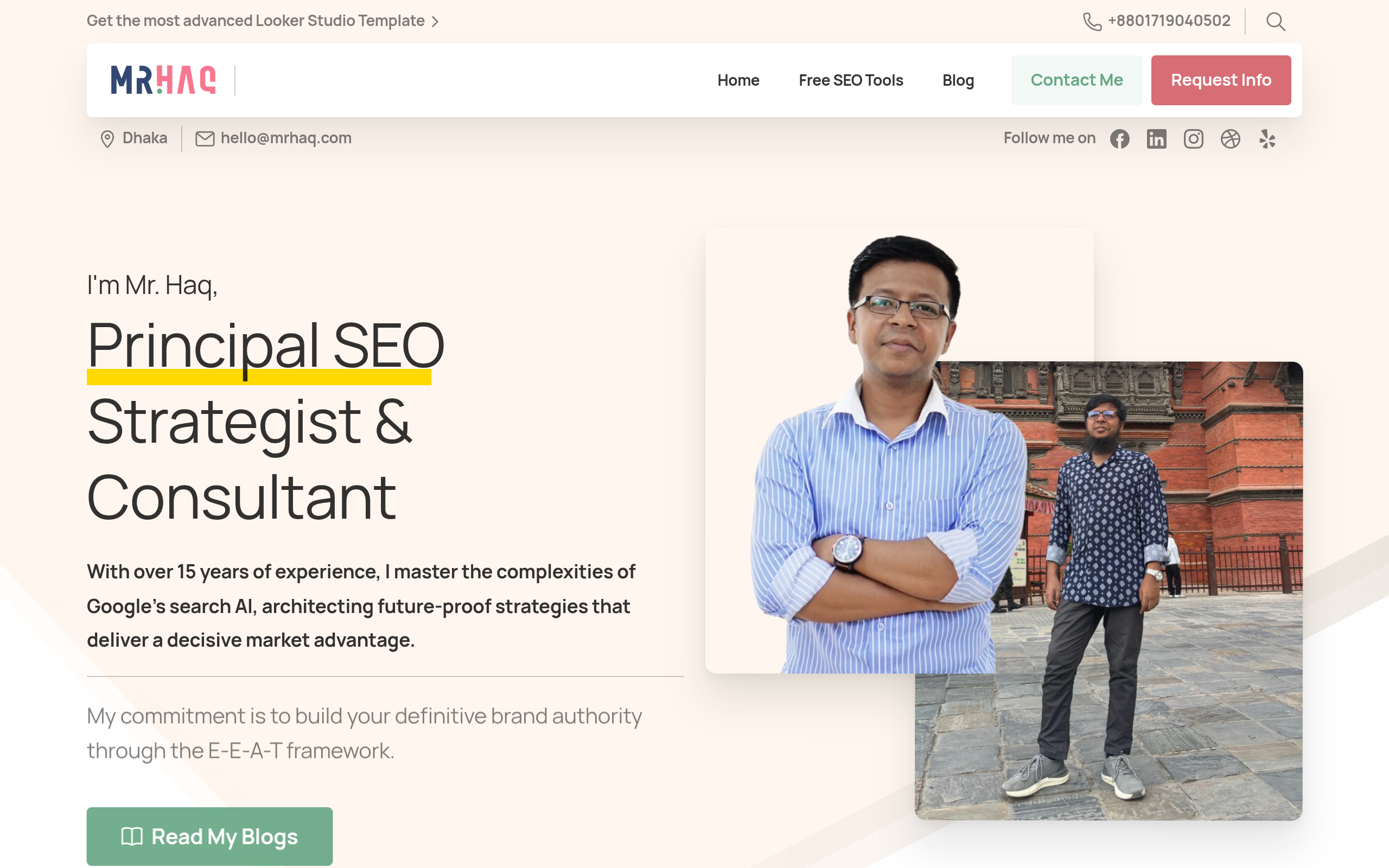
Mr Haq is the consulting option in this comparison rather than another dashboard. As an SEO strategist and consultant based in Dhaka, Mr Haq works across technical SEO, content strategy, E-E-A-T, local SEO, link building, analytics, and AI search optimization. That makes the service relevant when a local visibility problem is entangled with weak pages, a migration, ranking loss, poor measurement, or an international expansion plan. See the official Mr Haq website for current service information.
Consulting is useful when a business needs someone to decide what the data means and sequence the work. For example, a Bangladesh-based healthcare practice may need profile cleanup, locally relevant service pages, technical fixes, review-process guidance, and conversion tracking—not seven disconnected tool subscriptions. A marketing agency may instead use strategy support for a white-label audit framework and client reporting.
Trade-offs and buyer verdict
- Best for: Businesses and agencies that need diagnosis, prioritization, implementation guidance, or recovery strategy.
- Does not suit: Buyers who only want inexpensive automated scans with no consulting or execution support.
- Standout: A cross-discipline SEO assessment when local symptoms have technical, content, authority, or measurement causes.
Implementation burden: Moderate for the client because the business must provide access, context, stakeholders, and implementation resources. The benefit is that the audit can be shaped around commercial goals instead of a fixed software template.
Commercial model: Consulting scope and fees should be agreed directly around the audit, strategy, implementation support, or reporting requirement. It is not a replacement for every data source; a consultant may still use Google Business Profile and specialist tools where they improve evidence.
Comparison
The table uses the same decision criteria for every option. “Audit depth” describes the primary job, not a promise that the product covers every local ranking factor. Pricing should be verified in 2026 because plans, limits, data sources, and packaging change.
| Option | Primary audit job | Local ranking or listings coverage | Implementation burden | Commercial model and fit |
|---|---|---|---|---|
| BrightLocal | Broad local SEO research, monitoring, and reporting | Rank tracking, citations, audits, and reporting workflows | Moderate | Subscription; strong fit for SMBs and agencies |
| Whitespark | Citation discovery and local competitor research | Strong citation focus; limited as a complete technical audit | Low to moderate | Product or service offerings; best for focused off-site research |
| Local Falcon | Geographic map visibility measurement | Specialist map-grid rank tracking | Moderate | Verify current usage or subscription terms; best for variable local coverage |
| Moz Local | Listings management and business-data consistency | Supported directory and location-data workflows | Moderate | Subscription; best for ongoing listings maintenance |
| Yext | Centralized enterprise location-data governance | Listings and digital presence management | Moderate to high | Confirm current sales-led terms; best for larger multi-location organizations |
| Google Business Profile | First-party profile setup, maintenance, and inspection | Direct Google profile management and performance context | Low to moderate | Free profile; labor and wider audit work remain necessary |
| Mr Haq | Strategic diagnosis and prioritized SEO consulting | Local SEO combined with technical, content, authority, and analytics work | Moderate | Consulting scope; best when tools alone do not explain the problem |
How to choose the right local SEO audit route
Match the purchase to the failure mode
Start with evidence, not the tool’s feature count. If the profile is unverified or inaccurate, begin with Google Business Profile. If directory information is inconsistent across locations, evaluate Moz Local or Yext. If the question is “how far does our visibility extend from this address?”, Local Falcon is more directly relevant. If competitors have citations and local references that the business lacks, Whitespark can support the research. If the team needs recurring reports across clients, BrightLocal is the more balanced shortlist.
When the business has suffered a major ranking loss, avoid treating a local tool as a penalty detector. Separate the investigation into technical changes, content and intent, link and review patterns, profile eligibility, and measurement errors. A specialist consultant may be more economical than buying several tools and still failing to prioritize the work.
Use a practical buying process
- Write the decision statement: For example, “We need to explain map visibility by neighborhood for 12 clinics,” not “We need more SEO data.”
- List the locations and markets: Include Bangladesh, international markets, service areas, and any duplicate or relocated offices.
- Test the inputs: Use real keywords, verified addresses, actual competitors, and the reporting format the team will use.
- Check operational limits: Confirm current location, keyword, scan, user, export, country, and support limits before signing.
- Assign implementation ownership: An audit without a responsible person for profile, page, technical, and reputation work will not change visibility.
Do not let a local audit become a list of cosmetic edits. A useful report should identify the highest-impact uncertainty, explain the evidence behind it, assign an owner, and define what will be monitored next. For on-page checks, a separate meta description length checker or an internal link opportunity tool can support execution, but neither should be mistaken for a complete local SEO diagnosis.
For most small businesses, the sensible starting combination is Google Business Profile plus one specialist or general-purpose platform chosen for the actual gap. Agencies often benefit from BrightLocal for repeatable reporting, while multi-location organizations should compare listings governance products against their market coverage and approval needs. Choose Mr Haq when the evidence points to a connected strategy problem requiring prioritization across local, technical, content, authority, analytics, or AI search work. For a scoped assessment or strategic support, see Mr Haq’s SEO consulting services Mr Haq.
Authored with NotFair SEO