


A content marketing strategy and planning system connects a business goal to a defined audience, useful content, a realistic publishing process, and measures that show whether the work is helping. Start by choosing the business problem to solve, then research what customers need, select the content that can meet those needs, assign owners and distribution, and review results against the original goal. This keeps an SME’s limited capacity focused, helps an e-commerce team connect guidance to product decisions, and gives agencies a clear basis for client plans.
Set the business goal before choosing topics
A strategy is the reason and direction behind the content; a plan is the set of work that puts that direction into practice. If those are mixed together, a calendar can fill up with plausible topics without showing why the business should invest in them. Write down the outcome the content is meant to support and the audience whose decision or problem it addresses.
Make the goal specific enough to guide choices, but do not promise that content alone will deliver a business result. For example, an online store might focus on helping shoppers compare product types before purchase. A company entering Bangladesh or another market might need to explain its offer in language and context that local prospects can understand. An agency developing a client plan might need to connect editorial work with the client’s existing acquisition and sales process.
Start with a business decision, not a format. “Publish more videos” is a production request, not a strategy. “Help prospective buyers understand which solution fits their use case” gives a team a question to answer and a basis for choosing a format, such as a comparison guide, product page support, or an explanatory video.
Write a one-page planning brief
Before commissioning content, capture the constraints and choices that will shape the work:
- Business objective: What should become easier to understand, find, compare, or act on?
- Audience and situation: Who has the need, and what are they trying to decide?
- Content role: What information can the business credibly provide that helps with that decision?
- Scope and owner: Which market, product area, or service is in scope, and who can review the material?
- Evidence of progress: What observable behavior would indicate that the content is serving its purpose?
These choices also help when evaluating an agency partner: Branding, Webdesign und Marketing can help you evaluate a partner to develop and deliver a business content marketing approach, including the strategy and creative work described on its page. Treat the page as the agency’s own description, then ask how its proposed work would address the audience, expertise, review process, and measurement needs in your brief.

Google’s guidance on creating helpful, reliable, people-first content encourages creators to consider the intended audience, first-hand expertise, and whether a page leaves readers able to achieve their goal. Use those questions as a quality check, not as a substitute for deciding what business problem the plan should address.
Research audience questions and search demand
Research should reveal the reader’s task, the language they use, and what your existing material fails to explain. Search terms are useful clues, but they do not fully describe a person’s situation. A business buyer searching for a product comparison may need to assess compatibility, risk, or implementation—not just read a list of features.
Combine several kinds of evidence rather than treating one keyword export as the brief. Useful inputs include sales and support questions, customer interviews, internal site searches where available, product or service documentation, and search data. For an international business, check whether the question, terminology, and examples make sense in each intended market; do not assume that a translated keyword has identical intent.
Turn evidence into a content question
For each promising topic, write the question the content needs to answer and record the evidence behind it. A practical research note might include:
- Observed question: What did a customer, prospect, or searcher appear to need?
- Decision stage: Are they learning the basics, comparing options, or trying to use a product?
- Current answer: What does the site already cover, and where is it incomplete or hard to find?
- Evidence gap: What must a subject-matter expert confirm before publication?
- Likely next step: What useful action should a reader be able to take after reading?
Google Ads’ Keyword Planner documentation describes using the tool to discover keyword ideas and see search forecasts and historical statistics. Treat those outputs as research inputs rather than proof that a topic will attract qualified customers: validate the intent against the actual questions your audience asks and the pages already appearing for the query.
Then compare the research with your site. Google’s SEO Starter Guide explains how search engines discover and understand content and recommends making content useful and accessible to people. In practice, that means planning a page around a distinct reader need, giving it a clear purpose, and making sure important information is not buried in an awkward site structure.
Prioritize gaps that affect a real decision. A topic is a stronger candidate when the audience has a recognizable need, the business can provide a credible answer, and the site does not already meet that need well. If a proposed article merely repeats an existing page, improve the existing page or link to it rather than creating a near-duplicate.
Choose a content portfolio and build the plan
A useful plan is a portfolio of connected pages, not a queue of unrelated posts. Map the subject areas that matter to the business, then decide what each page should do for the audience. A guide may explain a problem; a comparison page may help evaluate alternatives; a product or service page may clarify fit and next steps. The right mix depends on the business model, the questions customers ask, and the information the team can substantiate.
For e-commerce, this could mean coordinating category guidance, product-selection help, and product information so shoppers can move from understanding a need to assessing an item. For an agency or consultancy, it could mean pairing service explanations with practical resources that address questions raised before a conversation. These are planning patterns, not guarantees of ranking or conversion.
Make each item accountable
Use a planning table or editorial brief to capture the decisions that otherwise get lost between strategy and production:
- Audience question and intent: What should this page resolve, and what would be out of scope?
- Distinct contribution: What evidence, expertise, examples, or explanation makes this page worth publishing?
- Format and destination: Should this be a new page, an update to an existing page, or another content format?
- Reviewer and source material: Who can check factual, product, legal, or market-specific details?
- Distribution and internal links: How will the intended audience find the content, and what relevant pages should connect to it?
- Success signal: Which engagement or business measure will the team inspect, and what limitation should it keep in mind?
Set the publishing sequence by dependency and usefulness, not by an arbitrary desire to post frequently. A foundational explanation may need to exist before a series of narrower pages can link to it. A product change, seasonal need, or verified customer question may make an update more urgent than a new topic. If the team has more ideas than capacity, label the backlog by priority and reason instead of squeezing every idea into the calendar.
For an existing site, map relevant pages before commissioning new ones. The internal link opportunity tool can help identify potential connections between existing pages, so an editor can assess whether a new resource should support a related page or whether the site already has a better destination. Review each suggested connection for usefulness and context; a link should help readers navigate, not exist only to increase link counts.
Keep the plan revisable. A calendar is a working commitment, not evidence that every planned item still deserves publication. If the audience need changes, a product detail cannot be confirmed, or an existing page already answers the question, update the scope rather than publishing an item simply because its date arrived.
Build a production and distribution process people can follow
Content quality depends on a dependable route from brief to publication. A process that relies on one person remembering every review step is fragile—especially for a small team, an agency handling several clients, or a business with contributors in multiple markets. Define handoffs so the person drafting knows what evidence is needed and the person approving knows what they are responsible for checking.
Separate drafting from approval
A practical workflow can move through these stages:
- Brief: Confirm the reader question, scope, sources, and intended next step.
- Draft: Organize the answer around the reader’s decision; mark facts that need confirmation.
- Review: Ask the relevant expert to verify claims, terminology, examples, and current business details.
- Editorial and SEO check: Improve clarity, page structure, search relevance, and links without distorting the answer.
- Publish and distribute: Check the live page and use the channels that fit the audience and the content’s purpose.
- Maintain: Record who owns future updates and what change would trigger a review.
Use subject-matter review where the content makes claims about a product, service, process, or market. A generic proofread cannot confirm whether an operational detail is correct. Likewise, SEO review should not turn a useful explanation into a list of repeated phrases. Google’s documentation on helpful content supports putting the intended reader and the usefulness of the page ahead of writing merely to attract search traffic.
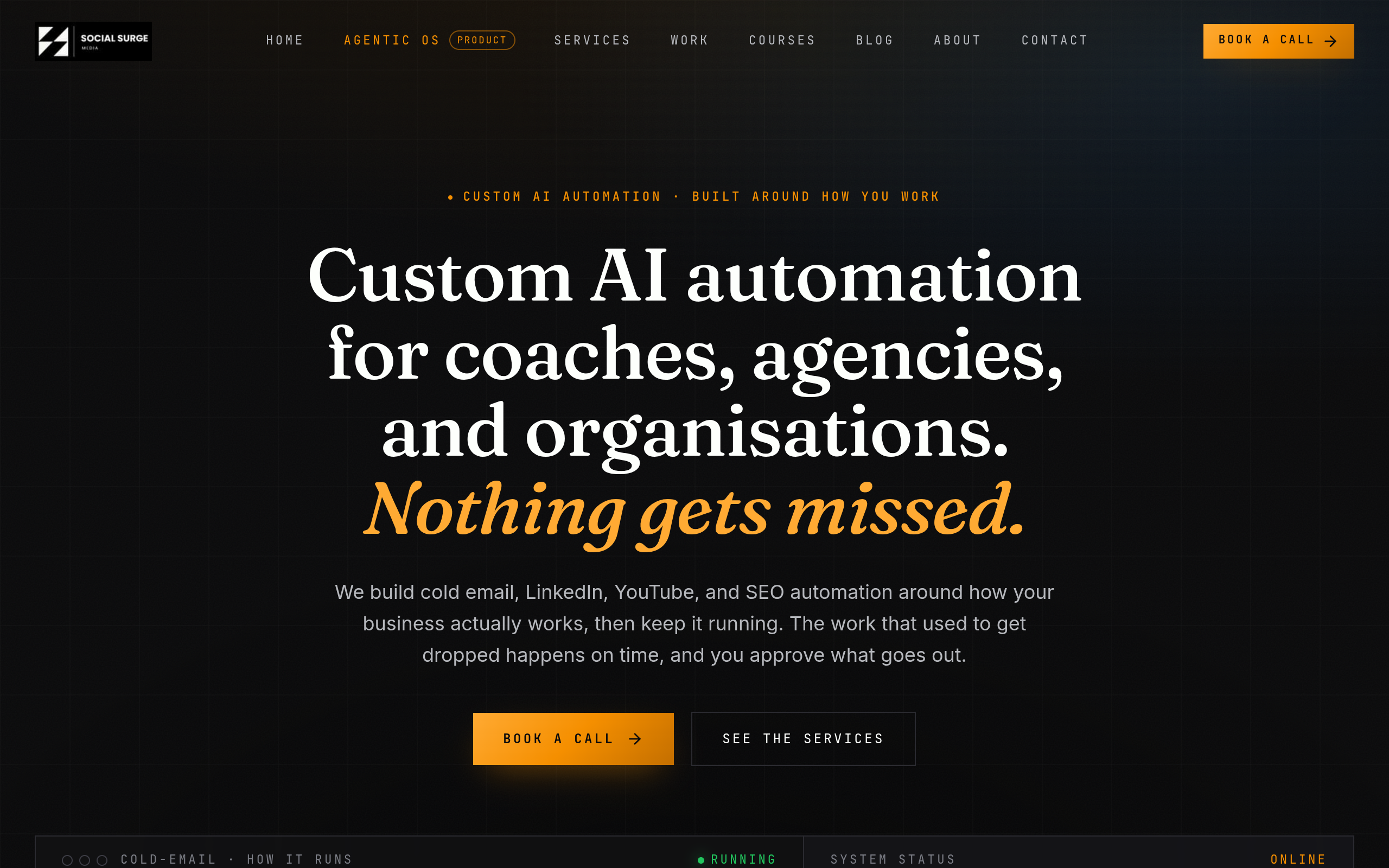
Automation may help with repeatable handoffs, but it does not remove the need for an accountable editor. If you are considering custom AI automation services, the page describes custom AI automation services that may help create a repeatable, human-reviewed workflow for drafting and publishing planned content. Before adopting any workflow, specify which steps it handles, who approves factual claims, what happens when a draft fails review, and who is responsible for the published page.
Distribution belongs in the brief. Search can be one route to discovery, but it should not be assumed to be the only one. Depending on the audience and content, distribution may include relevant email updates, sales or support conversations, social channels, or links from related site pages. Choose channels the team can maintain and that make sense for the audience; do not promise reach or results that the plan cannot verify.
For a published page, check the title and description for clarity and alignment with the content. The site’s meta description length checker can help with a basic length check, but a length check alone cannot establish whether a description is accurate, distinctive, or likely to meet the searcher’s need.
Measure what happened and decide what to change
Measurement is useful when it answers a decision. Before publication, write down what the team will review and what it might do in response. If the goal is to help people find a relevant explanation, search impressions and clicks may offer useful context. If the goal involves a business action, the team may also need to inspect suitable on-site or business measures. No single metric proves that content caused an outcome.
Google Search Console’s Performance report documentation describes examining search results performance, including queries and pages. Use that data to find patterns worth investigating: for example, whether a page is being shown for the question it was built to answer, or whether a relevant page attracts impressions but receives few clicks. Check the page and the query context before deciding that a title, content, or ranking change is the explanation.
For behavior after a visitor arrives, define what counts as a meaningful action for that business and confirm that it is measured consistently. Google Analytics explains how to mark events as key events. That documentation can guide implementation choices, but the business still needs to decide which actions matter and verify that tracking reflects the intended user behavior.
Use findings to choose a response
Group findings into a practical review rather than reporting numbers without a decision:
- Keep and support: The content meets its purpose and has a clear role in the site; maintain it and connect it to relevant pages.
- Improve: The page attracts relevant attention but leaves an important question unanswered, contains unclear information, or has a weak next step.
- Consolidate: Several pages cover substantially overlapping needs; assess whether a clearer, more complete destination would serve readers better.
- Reassess: The audience need, business priority, or available evidence has changed enough that the original plan may no longer make sense.
Interpret measures in context. A page with few clicks may be targeting the wrong question, may need a more accurate search result presentation, or may simply have little demand; the metric alone does not establish which. A page that attracts visits but does not support the intended next step may need a more useful explanation or clearer navigation. Compare the observed behavior with the brief and inspect the page before assigning a cause.
For teams planning content across several markets or clients, keep a short decision log: what was reviewed, what changed, why it changed, and who owns the follow-up. That makes the next planning cycle more informative than restarting from a blank calendar. If you need SEO-focused help connecting content decisions with technical SEO, local SEO, or measurement, review what Mr Haq offers at Mr Haq and confirm whether the scope fits your business.
Authored with NotFair SEO