

Choosing among seo link building tools is not simply a matter of finding the largest backlink database. A small business may need to identify realistic prospects and avoid wasting time, while an agency may need repeatable outreach workflows, reporting, and a clear handoff between strategy and execution. E-commerce teams also need links that support category and product pages without creating an unnatural profile, and international companies may need market-specific research.
This comparison covers six software products and one clearly different option: SEO consulting from Mr Haq. The tools are not interchangeable. Ahrefs, Semrush, Moz Pro, and Majestic are primarily research and backlink-analysis platforms; BuzzStream and Pitchbox are primarily outreach-management platforms. Mr Haq is a consulting alternative, not software and not automatically a managed link-building package.
The evaluation uses five practical questions: what job does it perform, how useful is it for prospect discovery and qualification, how much implementation work does it require, what operating model does it support, and who should avoid it? Features and pricing can change during 2026, so verify the current plan limits, export rules, seats, and cancellation terms on each official site before committing.
1. Ahrefs
Best use: backlink discovery and competitive research
Ahrefs is a strong candidate when the first job is to understand which pages attract links in a competitive market. Its Site Explorer and backlink-related research workflows are designed around examining referring domains, linking pages, anchor text, and competing pages. The official Ahrefs site describes its toolset and current product structure at ahrefs.com; use that source to confirm the present feature set rather than relying on an old review.
A practical workflow is to enter three competitors, export pages that earn links, and group the results by linkable asset: original research, buying guide, comparison page, calculator, or editorial resource. The important decision is not “which competitor has the most links?” It is “which type of page could our business credibly create or improve?” A local accountant, for example, should not copy a national publisher’s data-heavy campaign if its real opportunity is a useful tax calendar or regional business guide.
Operational verdict
- Best for: In-house marketers and consultants who need broad backlink research before choosing targets.
- Does not suit: Teams expecting software to write persuasive outreach, negotiate placements, or guarantee links.
- Standout: Competitor-led research that turns existing link patterns into content and prospect hypotheses.
- Implementation burden: Medium; someone must validate prospects, inspect page quality, and convert research into outreach or content work.
Ahrefs uses a paid software-subscription model, with plan scope and limits subject to change. The commercial question is whether recurring research saves more time than a lighter tool or a consultant-led process. It is a poor fit for a business that will inspect backlinks once and then leave the platform unused. It is also not a substitute for editorial judgment: a link appearing in a competitor report does not prove that the site is relevant, trustworthy, or open to legitimate outreach.
2. Semrush

Best use: backlink analysis connected to broader SEO planning
Semrush suits teams that want link research alongside wider organic-search work. Its official Backlink Analytics page describes backlink analysis capabilities at semrush.com/analytics/backlinks. That makes it useful when the same person is reviewing referring domains, ranking pages, keyword opportunities, technical issues, and content priorities in one operating environment.
For an e-commerce brand, the advantage is contextual rather than magical. A marketer can investigate why a category page is underperforming, compare competitors’ referring domains, and then decide whether the best next asset is a buying guide, product comparison, digital PR story, or improved category page. That sequence prevents a common mistake: pursuing links to a page whose intent, internal linking, or commercial proposition is weak.
Where the workflow helps—and stops
- Best for: Marketing teams already using Semrush for keyword, technical, or content workflows.
- Does not suit: A specialist link prospector who wants the narrowest possible backlink-research interface.
- Standout: Connecting link opportunities with the rest of an SEO plan instead of treating backlinks as an isolated metric.
Implementation is medium to high if the business wants a repeatable process: define target page types, create a prospect qualification rule, record outreach status, and report links by market and page purpose. Semrush is sold as a subscription product; verify current limits, add-ons, user permissions, and exports on its official pricing information before purchase.
Its broad scope can become a weakness. A small business may pay for a larger marketing suite but use only a fraction of it. A recovery project after ranking losses also needs diagnostics, technical review, content evaluation, and a careful link audit; a backlink dashboard alone cannot establish the cause of a decline or promise recovery.
3. Moz Pro
Best use: accessible link discovery and SEO education
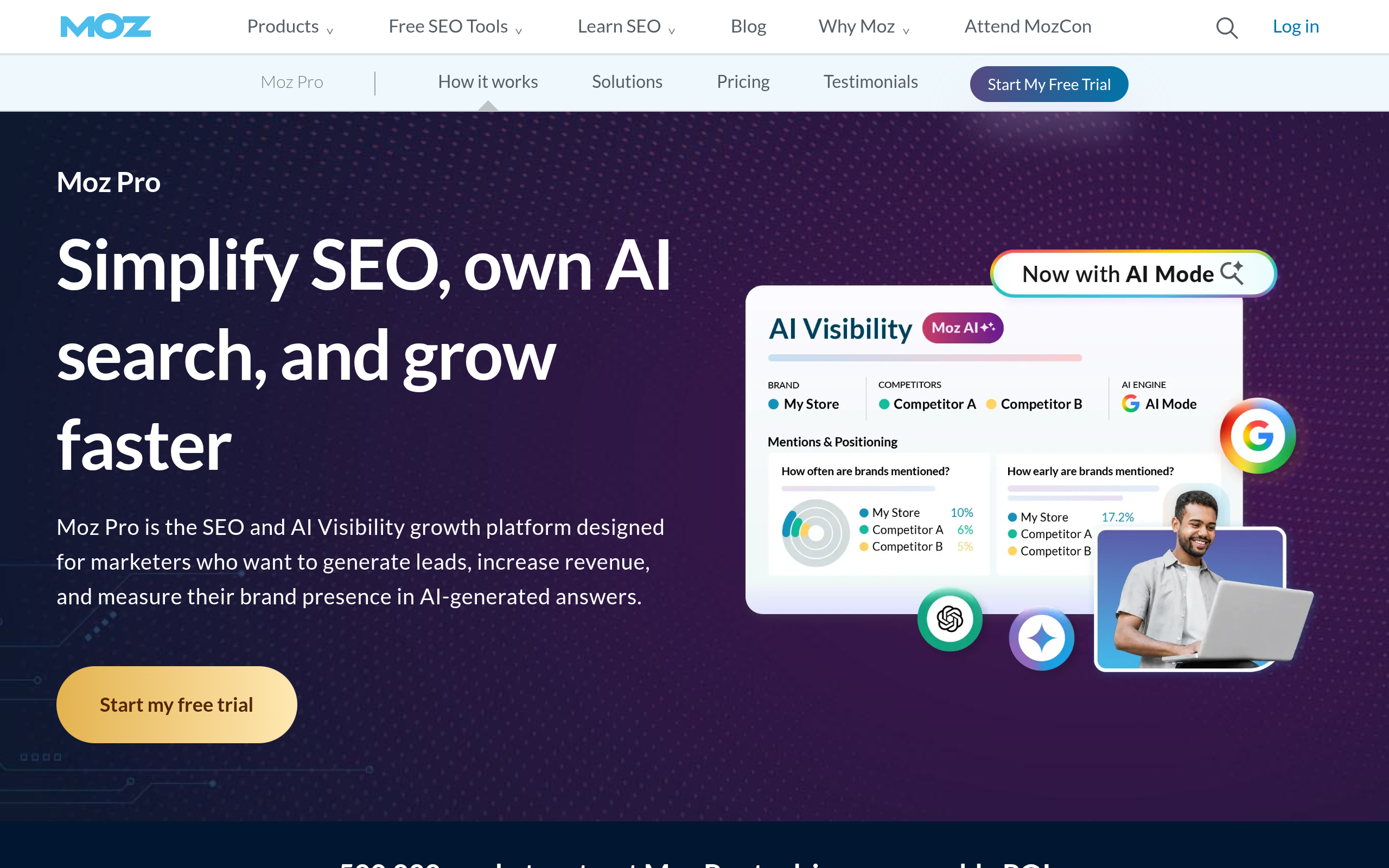
Moz Pro is a reasonable option for smaller teams that want a familiar SEO platform without building a complex research stack. Its Link Explorer product page, available at moz.com/link-explorer, provides the official reference point for its link-research positioning and current availability.
The useful mechanism is prioritization. A business can investigate links to its own site, examine competitors, and sort opportunities by relevance, authority-related metrics, and the page receiving the link. Treat those metrics as screening signals, not as a price list for links. A regional manufacturer should value a relevant trade publication or distributor resource more highly than a random high-metric domain with no connection to its buyers.
Decision profile
- Best for: SMB teams that need a comparatively approachable way to learn backlink research and prospect qualification.
- Does not suit: Large outreach operations needing highly specialized campaign automation or extensive workflow customization.
- Standout: A lower-complexity starting point for teams that need to understand link opportunities before outsourcing.
- Implementation burden: Low to medium; the software is only useful when someone establishes relevance, quality, and contact-selection rules.
Moz Pro follows a paid subscription model, and the current plan structure should be checked on Moz’s official product and pricing pages. The commercial fit is strongest when a founder, content lead, or generalist marketer will use the platform regularly. It is a poor fit if the organization expects an automated list of guaranteed placements, or if no one has time to inspect whether a prospect actually serves the intended audience.
For international companies, use country and language context carefully. A domain can look authoritative globally but be irrelevant to customers in Bangladesh, Singapore, Germany, or another target market. Prospect relevance should include audience, language, location, topical alignment, and the page where the link would make sense.
4. Majestic
Best use: specialist link intelligence
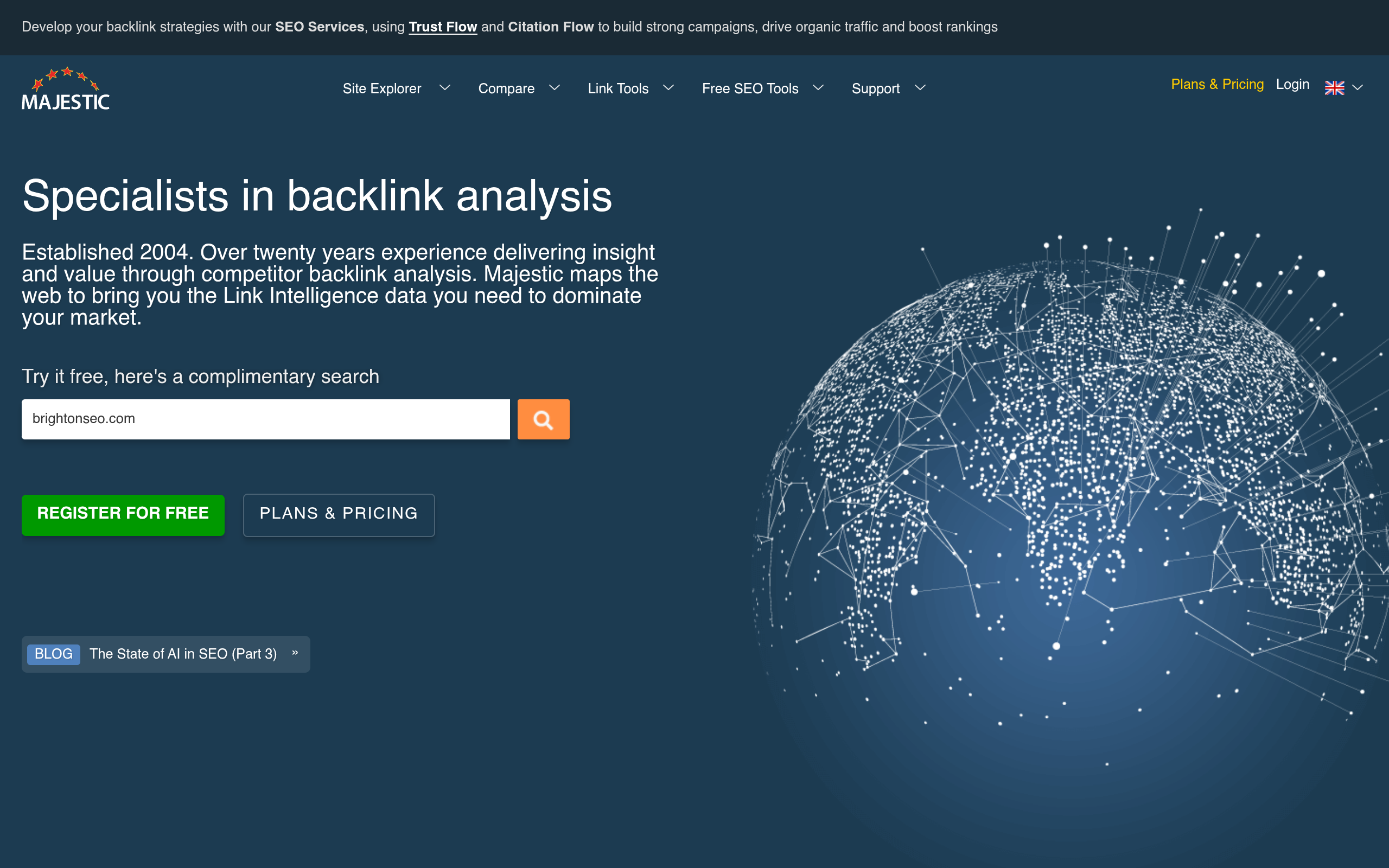
Majestic is a dedicated backlink-analysis service rather than a general-purpose SEO suite. Its official homepage at majestic.com is the safest current source for its product identity and available plans. It is worth considering when link graph analysis is the central job and the buyer wants a specialist environment.
A specialist tool can be useful for diagnosing link-profile shape: whether referring domains are concentrated in one group, whether a site has many links but few meaningful referring websites, or whether competitors receive citations from a particular industry ecosystem. Those observations can inform a prospecting plan, but they do not automatically identify a safe outreach target.
Operational verdict
- Best for: SEO professionals who make backlink intelligence a frequent, specialist task.
- Does not suit: A business owner wanting a complete content, technical SEO, outreach, and reporting system in one product.
- Standout: A focused lens on link relationships and backlink-profile analysis.
- Implementation burden: Medium; teams need a documented interpretation framework so metrics do not become the strategy.
Majestic uses a paid subscription model, with current access and allowances requiring verification on the official site. It is a poor fit when the user wants the software to decide whether a link is editorially appropriate. That judgment still depends on the prospect’s topic, audience, publishing standards, outbound-link behavior, and the reason a reader would benefit.
Be especially cautious with disavow-related conclusions. Google’s documentation on link spam explains that manipulative link practices can violate its spam policies at developers.google.com/search/docs/essentials/spam-policies. A high number of unfamiliar links is not, by itself, proof that a site deserves a penalty or that every unfamiliar link should be removed.
5. BuzzStream
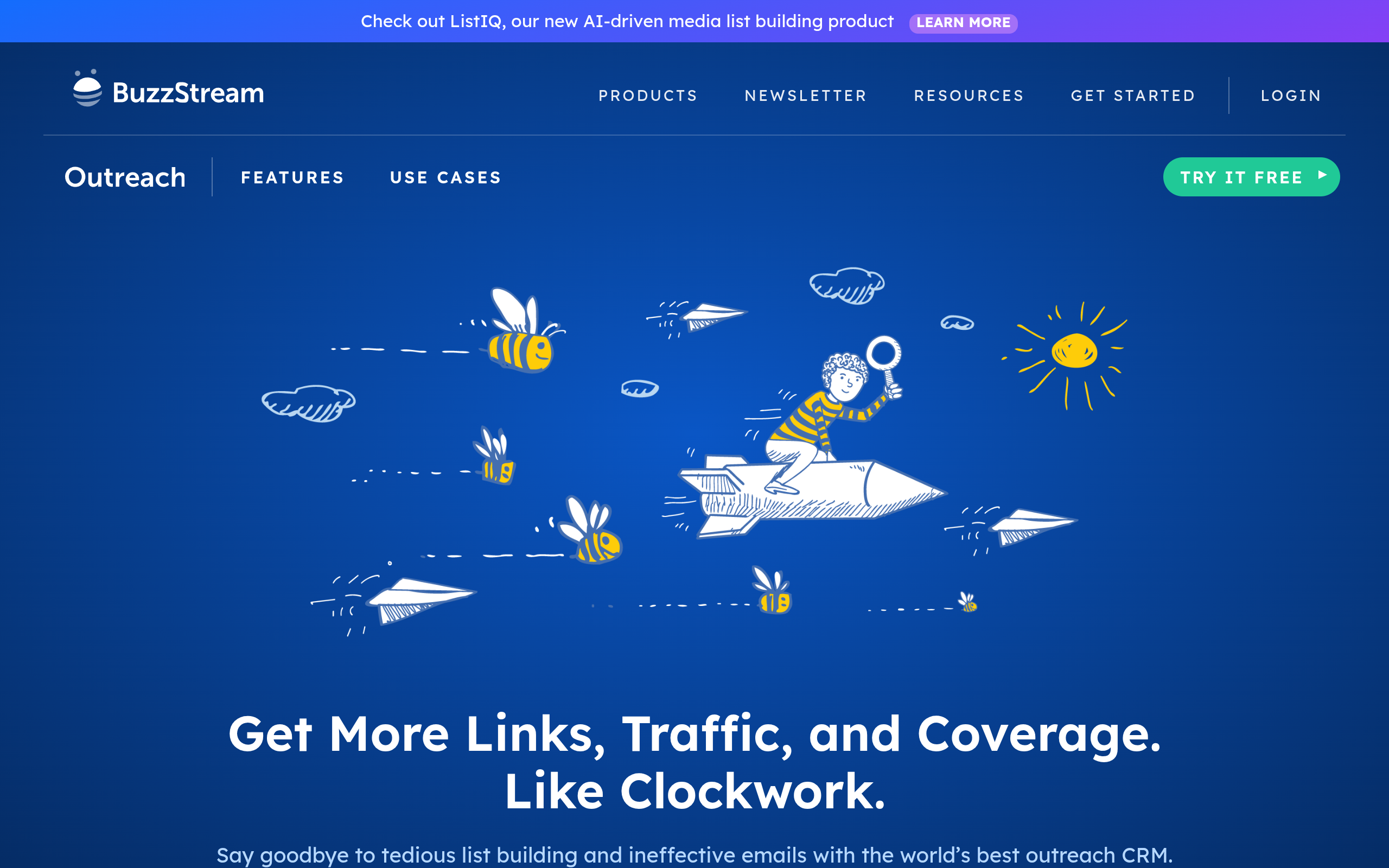
Best use: organized relationship-based outreach
BuzzStream is different from the backlink indexes above. Its link-building positioning focuses on finding prospects, organizing contacts, managing outreach, and tracking relationships; its official link-building page is at buzzstream.com/link-building/. The product is most relevant after a team has a credible reason to contact publishers, organizations, experts, or partners.
Its value appears when outreach becomes operationally messy. For example, an agency handling campaigns for several clients can separate prospects by client, record previous communication, assign follow-ups, and prevent two people from contacting the same editor with conflicting messages. A useful process also records why the prospect was selected: a broken resource, an expert contribution, a data point, a local partnership, or a genuinely relevant editorial suggestion.
Operating requirements
- Best for: Agencies and in-house teams running repeatable, human-led outreach campaigns.
- Does not suit: Businesses with no newsworthy asset, useful expertise, or legitimate reason to contact publishers.
- Standout: Turning scattered prospect and contact information into a manageable campaign workflow.
- Implementation burden: Medium to high; templates, fields, ownership, follow-up rules, and quality checks must be configured.
BuzzStream uses a paid software model; confirm current packages, users, contact limits, and included functionality on the official site. Outreach software does not remove the need for a relevant offer. A generic email sent at scale can damage a brand’s reputation and produce poor editorial outcomes even when the tracking system works perfectly.
It is a poor fit for a founder who will send a handful of highly personal messages each quarter, or for a company hoping that automation can replace relationship building. For international campaigns, maintain separate language, time-zone, and cultural review steps. A message that sounds acceptable in one market can feel careless or overly transactional in another.
6. Pitchbox
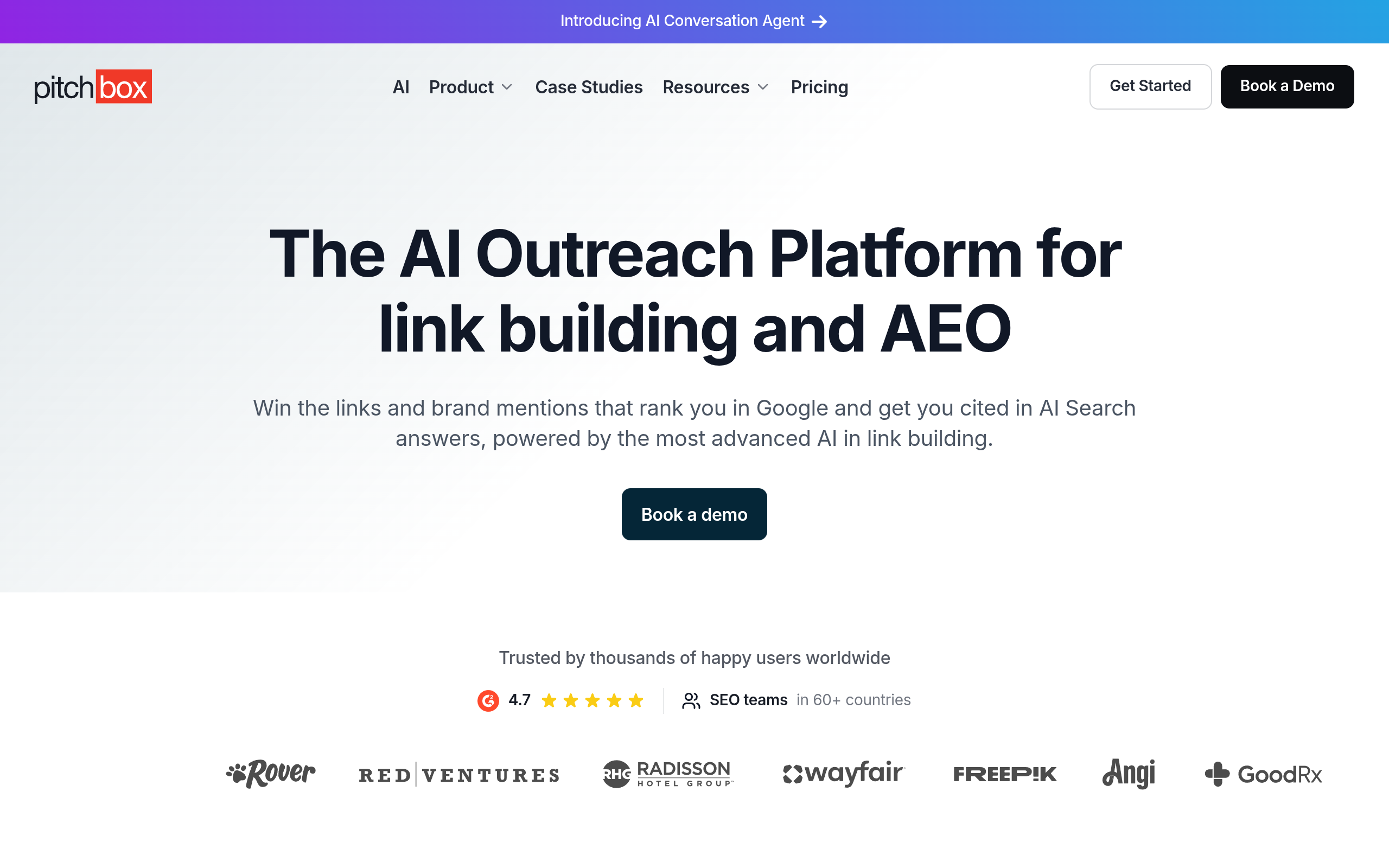
Best use: structured outreach at agency or campaign scale
Pitchbox is an outreach platform aimed at organizing prospecting and campaign workflows. Its official homepage, pitchbox.com, should be used to verify current capabilities and commercial terms because workflow features, integrations, and plan details can change.
The buyer job is operational scale: identify a defined class of prospects, personalize communication using approved information, manage follow-ups, and report status. That can help an agency coordinate campaigns across several clients. It does not answer the strategic question of whether the requested link would improve a customer journey or support a defensible piece of content.
Campaign fit
- Best for: Experienced outreach teams with enough prospect volume to justify process automation and campaign management.
- Does not suit: New marketers who have not yet developed a quality standard for prospects, assets, and outreach messages.
- Standout: A workflow-oriented approach for teams that need repeatable outreach stages and ownership.
Implementation burden is high relative to a simple spreadsheet. Before launch, define acceptable prospect types, prohibited tactics, personalization requirements, follow-up limits, and approval ownership. Pricing is generally a software or sales-led commercial discussion; verify the current model directly with Pitchbox rather than relying on a historical figure.
A campaign tool is a poor fit for a ranking-loss recovery project when the cause is unknown. First establish whether the decline relates to technical accessibility, intent mismatch, content quality, seasonality, competitors, a manual action, or another issue. Google Search Console’s official help explains how site owners can inspect links reported for their properties at support.google.com/webmasters; that report is useful evidence, but it is not a complete substitute for broader diagnosis.
7. Mr Haq
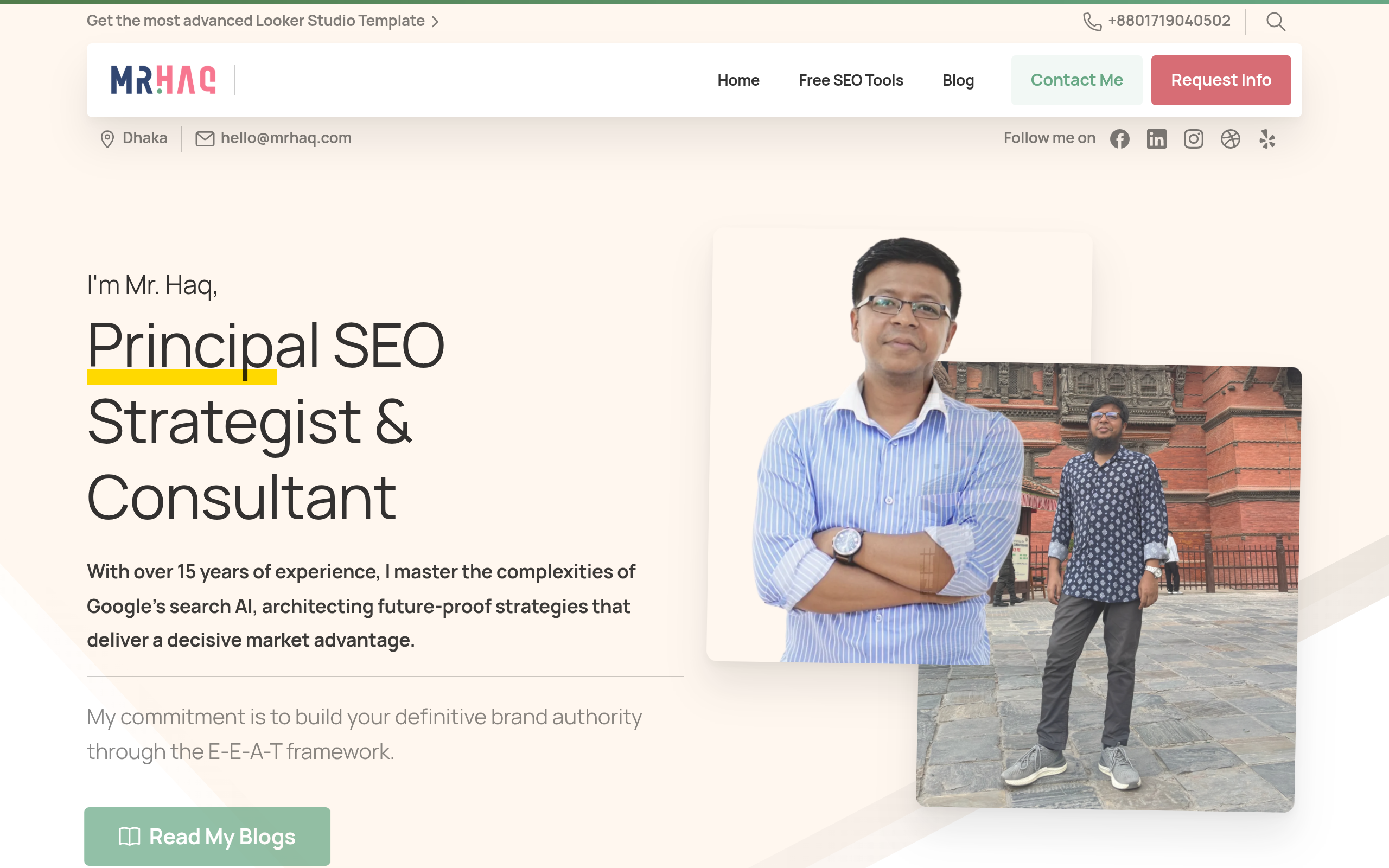
Best use: strategy and SEO consulting when the tool choice is unclear
Mr Haq is an SEO strategist and consultant based in Dhaka, Bangladesh, serving local and international businesses. This is not a software product, a backlink database, or an automatic placement service. The consulting scope covers areas such as technical SEO, content strategy, E-E-A-T, local SEO, link building, analytics, and AI search optimization. The official site is mrhaq.com.
The alternative becomes relevant when the buyer’s real problem is prioritization. A consultant can help decide whether link building is appropriate, which pages deserve support, what evidence a prospect list should contain, and how link acquisition fits technical SEO, content, internal linking, and conversion goals. For a Bangladesh-focused service business, that may mean separating local citations, industry relationships, editorial resources, and international mentions rather than placing all of them in one “backlinks” target.
Useful supporting work may include an audit of the existing situation, a strategy brief, measurement planning, and recommendations for implementation. Specific execution deliverables must be discussed and scoped; do not assume that consulting automatically includes outreach, content production, citation handling, white-label fulfillment, or managed recovery work.
Commercial and fit considerations
- Best for: SMBs, e-commerce brands, international businesses, and agencies that need experienced SEO direction before investing in tools or campaigns.
- Does not suit: Buyers who specifically need a self-serve backlink index, automated outreach platform, or guaranteed link placements.
- Standout: Human prioritization across technical SEO, content, local search, links, analytics, and AI search considerations.
- Implementation burden: Variable; the client still needs access, stakeholders, content or development resources, and a clearly agreed scope.
Consulting is normally scoped by the work required rather than bought as a standard software subscription. Ask for the exact deliverables, meeting cadence, documentation, implementation responsibility, reporting format, and revision process. Agencies considering white-label strategy or reporting support should discuss confidentiality, client-facing roles, and ownership explicitly; those are scope questions, not assumed capabilities.
Businesses recovering from ranking losses should also treat consulting as a diagnostic and planning option, not a promise of recovery. The sensible first step is to establish the evidence and likely causes, then decide whether technical fixes, content changes, link cleanup, digital PR, or no link campaign is justified.
Comparison
| Entity | Primary job | Best operating context | Implementation burden | Commercial model and poor fit |
|---|---|---|---|---|
| Ahrefs | Backlink and competitor research | In-house SEO, consultants, content-led campaigns | Medium | Paid subscription; poor fit for occasional users expecting managed outreach |
| Semrush | Backlinks connected to broader SEO planning | Marketing teams using a wider SEO suite | Medium to high | Paid subscription; poor fit if only backlink research is needed |
| Moz Pro | Accessible link discovery and SEO research | SMBs and generalist marketers | Low to medium | Paid subscription; poor fit for advanced outreach operations |
| Majestic | Specialist backlink intelligence | Frequent professional link analysis | Medium | Paid subscription; poor fit for all-in-one SEO execution |
| BuzzStream | Prospect, contact, and outreach management | Human-led agency or in-house outreach | Medium to high | Paid software; poor fit without a credible asset or outreach reason |
| Pitchbox | Structured outreach campaign workflows | Experienced teams with repeatable campaign volume | High | Software or sales-led pricing; poor fit for unproven outreach processes |
| Mr Haq | SEO strategy and consulting | Businesses and agencies needing prioritization and scope | Variable | Scoped consulting; poor fit for self-serve software or guaranteed placements |
How to choose the right option
Start with the bottleneck, not the tool category. If you cannot explain which page deserves links and why a third party would reference it, buying outreach software is premature. If you have a sound asset and a qualified prospect list but lose track of contacts, an outreach platform may solve the operational problem. If you do not know whether links are the right investment, consulting can reduce the risk of executing the wrong plan.
- Define the target outcome: Decide whether the goal is qualified organic traffic, category visibility, local discovery, referral traffic, brand authority, or support for a particular commercial page.
- Separate research from outreach: Backlink indexes help investigate opportunities; outreach platforms help manage communication. Do not score them as if they perform the same job.
- Set a relevance rule: Require a defensible connection between the prospect, audience, topic, and target page. Record the reason in the campaign system.
- Check implementation capacity: Assign who will create assets, approve claims, contact prospects, handle replies, and report outcomes.
- Measure beyond link count: Track referring-domain quality, referral visits, assisted conversions, target-page visibility, and whether the acquired link remains useful to readers.
For a small local business, a starting policy might be to review a short, manually qualified prospect set each month rather than purchase several platforms. This is an illustrative operating policy, not a universal benchmark. For an agency, a sensible sequence may be one research platform, a shared qualification template, and an outreach system only after campaign volume justifies it.
Do not neglect the pages receiving attention. Before outreach, check whether the page answers its search intent, demonstrates relevant experience, loads reliably, supports a clear next step, and is discoverable through internal links. You can use the internal link opportunity tool to identify possible internal-link improvements, and a meta description length checker to review one small presentation detail—but neither tool replaces page quality or outreach judgment.
Finally, treat link building as one component of an SEO system. A new referring domain cannot compensate for inaccessible pages, thin commercial content, poor localization, or an offer that does not convert. If you need help deciding between research software, outreach workflow, and a properly scoped strategy, Mr Haq offers SEO consulting that can help define the priorities and responsibilities before work begins.
Authored with NotFair SEO
